Coastal Foraging
Navigate the intertidal zones to harvest marine vegetables and salt-tolerant flora.
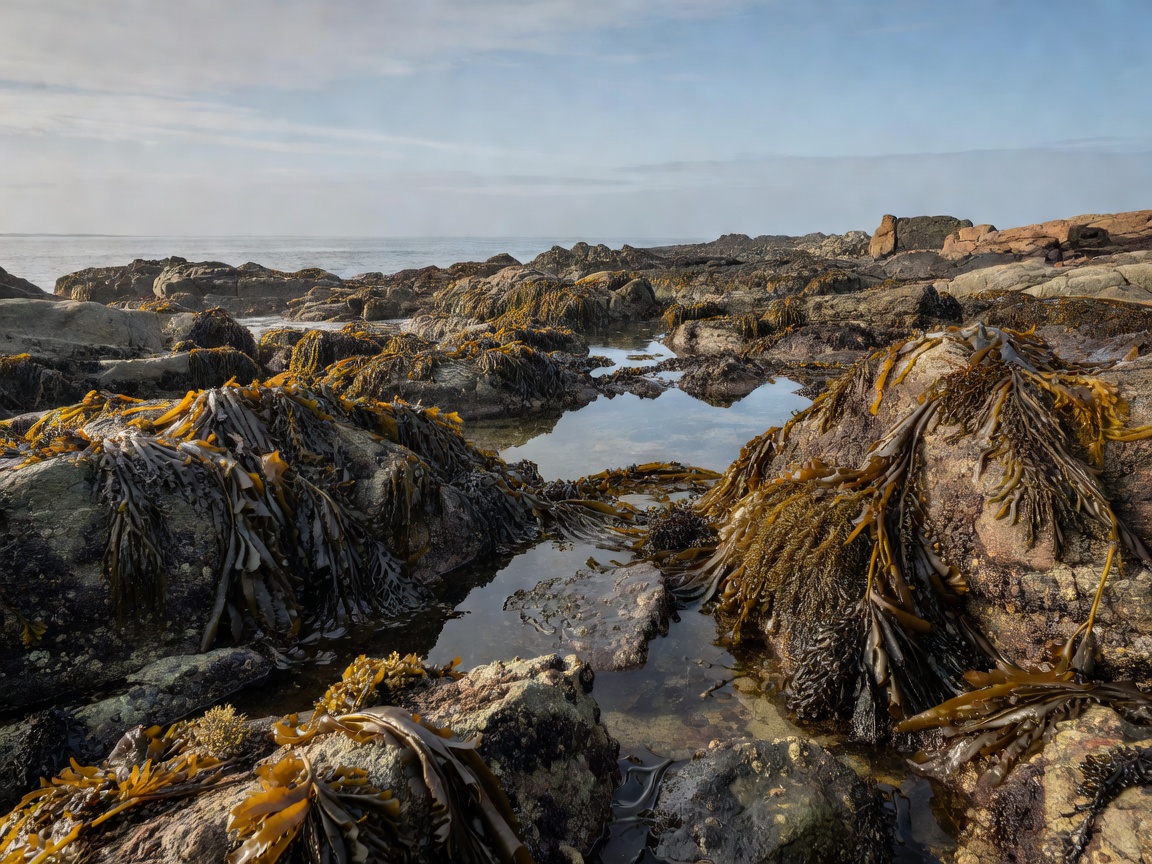
The Abundance of the Coast
The coastal environment is a harsh, dynamic ecosystem governed by the cyclical movement of tides, aggressive winds, and high salinity. Despite these extreme conditions, the shoreline supports a remarkable variety of edible plants and seaweeds. Coastal foraging offers flavors distinct from terrestrial environments: umami-rich marine algae, intensely salty marsh greens, and peppery dune brassicas. It requires careful planning, specifically reading tide charts, to safely access the intertidal zones where the greatest diversity lies.
Seaweeds and Kelp
Seaweeds are broadly categorized into three color groups: green, brown, and red. Virtually all true seaweeds found in cold coastal waters are non-toxic, making them an excellent category for beginners to explore, though flavor and texture vary wildly.
Kelp (various Laminariales species), characterized by its large, brown, leathery fronds, is a staple of coastal foraging. It is harvested from the lower intertidal and subtidal zones during the lowest spring tides. Rich in iodine and minerals, kelp can be dried to make a deeply savory dashi broth, or rehydrated and sliced into salads. When harvesting seaweed, the golden rule is to harvest living algae directly from the rock or substrate it is attached to. Never collect seaweed that has washed up on the beach (wrack), as it quickly degrades and can harbor harmful bacteria. Use scissors to cut only the upper two-thirds of the fronds, leaving the holdfast (the root-like structure) intact so the plant can regenerate.
Marsh Samphire (Salicornia)
Often referred to as sea asparagus or glasswort, Marsh Samphire is a succulent halophyte (salt-tolerant plant) that thrives in salt marshes and muddy tidal flats. It resembles miniature bright green cacti without the spines, consisting of segmented, jointed stems.
Samphire has an incredibly crisp texture and a naturally salty, oceanic flavor. It requires very little preparation—usually just a quick blanching in unsalted water and a toss in butter or olive oil. Because it grows in tidal mud, it must be washed thoroughly. Harvesting involves snipping the tender top segments; avoid pulling the plant by the roots, as the marsh ecosystem is highly sensitive to erosion.
Sea Rocket (Cakile maritima)
Moving up from the intertidal zone to the sandy dunes and shingle beaches, you will find Sea Rocket. A member of the mustard family (Brassicaceae), this low-growing, fleshy plant boasts pale lilac or white four-petaled flowers and deeply lobed, succulent leaves.
Sea Rocket brings intense flavor to the coastal pantry. Its leaves have a sharp, fiery, horseradish-like kick that diminishes slightly when cooked but is best appreciated raw as a fiery addition to salads or paired with freshly caught fish. Like many coastal plants, it has evolved thick leaves to retain fresh water in a saline environment, giving it an excellent crunch.
Tidal Safety and Water Quality
Coastal foraging carries significant physical risks. Understanding tide times is not optional; it is mandatory. Always plan your excursion on an outgoing tide, aiming to reach the lowest point about an hour before low tide. This gives you ample time to retreat before the tide turns. Getting cut off by a rapidly incoming tide is a leading cause of coastal emergencies.
Furthermore, water quality dictates the safety of your harvest. Seaweeds and marsh plants absorb elements directly from the water. Avoid foraging near sewage outfalls, busy marinas, industrial ports, or agricultural run-offs where heavy metal contamination and bacterial blooms are common. Check local environmental agency reports for water quality classifications before harvesting.