Spring Foraging
Discover the early greens that mark the end of winter.
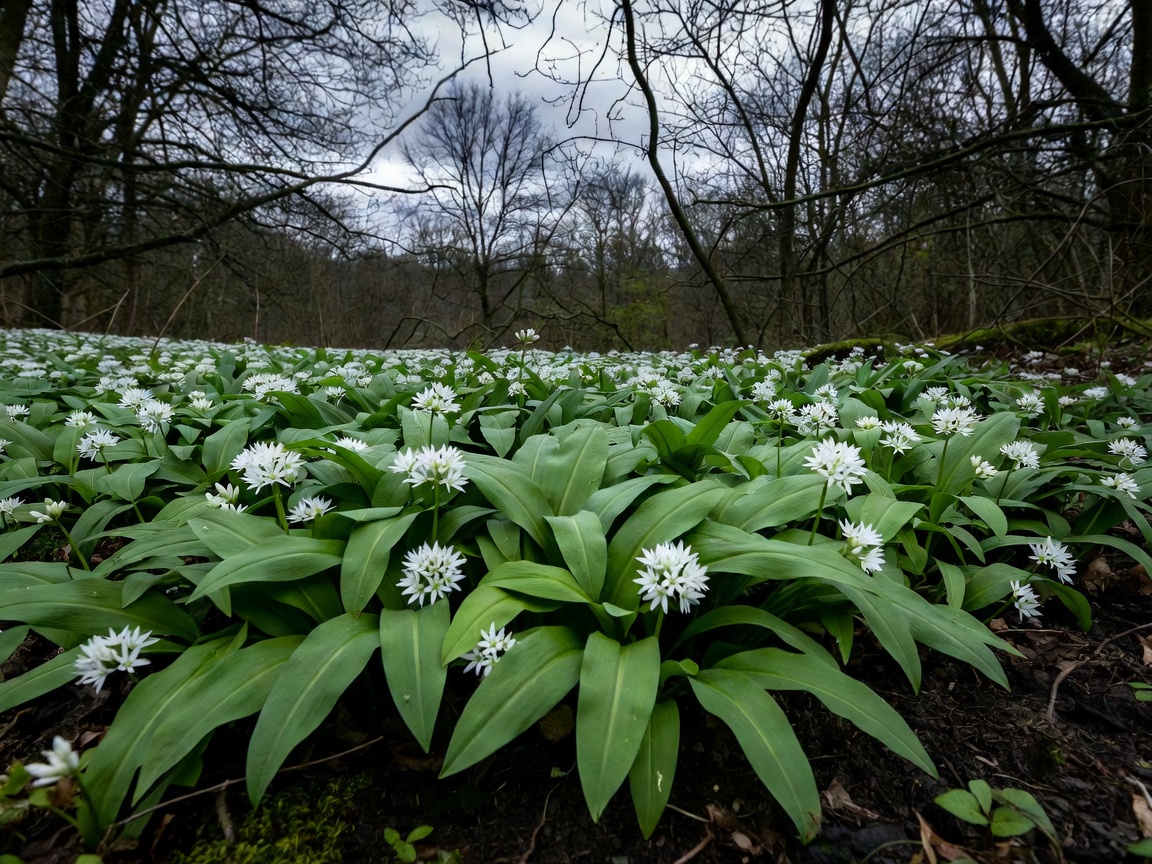
As the frost retreats and the days begin to lengthen, the woodland floor undergoes a rapid transformation. Spring is widely considered the most rewarding time for foragers, particularly for those seeking fresh greens, shoots, and early fungi. After a winter of root vegetables and preserves, the sudden availability of nutrient-dense wild plants provides an incredible addition to any diet. However, spring foraging also requires sharp identification skills, as many plants emerge at similar times and can easily be confused with toxic look-alikes before their mature features develop.
Wild Garlic (Allium ursinum) and Ramps (Allium tricoccum)
Depending on your geographic location, early spring brings either Wild Garlic (common in Europe) or Ramps (native to North America). Both belong to the Allium family and share a pungent, unmistakable aroma that closely resembles domesticated garlic and onions. Identifying these plants usually begins with the nose; if the crushed leaf does not smell strongly of garlic or onion, discard it immediately. This olfactory test is crucial for avoiding deadly look-alikes such as Lily of the Valley or Autumn Crocus, which have visually similar broad, lance-shaped leaves.
When harvesting, environmental stewardship is paramount. Ramps, in particular, are extremely slow-growing. Taking the bulb kills the entire plant, which can take up to seven years to reach maturity from seed. Ethical foragers advocate for harvesting only one leaf from a cluster, leaving the bulb entirely undisturbed in the soil. This ensures the patch can photosynthesize, flower, and repopulate the area.
The Humble Stinging Nettle (Urtica dioica)
Often dismissed as a painful nuisance, the Stinging Nettle is arguably one of the most versatile and nutritious wild foods available. Emerging early in the spring, the bright green tops of the nettle are rich in iron, calcium, and vitamins A and C. Handling them requires thick gloves and long sleeves, as the hollow hairs on the stems and leaves act like hypodermic needles, injecting histamine and formic acid into the skin.
The culinary application of nettles is vast. Blanching the leaves in boiling water or vigorously sautéing them destroys the stinging mechanisms entirely, rendering them perfectly safe to eat. They can be utilized as a direct substitute for spinach in soups, pestos, and spanakopita. Harvesting should be limited to the top four to six leaves of young plants before they begin to flower; once flowering occurs, the plant develops cystoliths (microscopic calcium carbonate particles) which can irritate the urinary tract.
Hunting for Morels (Morchella)
For fungi enthusiasts, spring means one thing: Morels. These highly prized, honeycomb-capped mushrooms appear for a very brief window when soil temperatures reach specific thresholds (typically around 50°F or 10°C). They are notoriously difficult to spot, often blending perfectly with the dead leaves and decaying wood of the forest floor.
Morels have a distinct appearance, but they do have dangerous look-alikes known as "False Morels" (species within the Gyromitra genus). True morels have a completely hollow interior when sliced in half vertically, from the tip of the cap down through the stem. The cap is also continuously attached to the stem. False morels often have chambered, cottony, or solid interiors, and their caps attach near the top of the stem, hanging down like a skirt. Positive identification of the hollow interior is absolutely mandatory. Furthermore, true morels must always be thoroughly cooked before consumption, as they contain mild toxins when raw that can cause significant gastrointestinal distress.
Equipment and Preparation
Spring weather can be highly unpredictable. When setting out, dressing in easily removable layers and wearing waterproof footwear is highly recommended. Your foraging kit should include a sharp knife or shears for clean cuts, thick gloves (especially for nettles and brambles), a breathable mesh bag or wicker basket to allow spores to drop and prevent plants from sweating, and a reliable, region-specific field guide for cross-referencing.
Never rely solely on digital applications for identification. While they are useful starting points, a dedicated field guide provides the structural details necessary for safe consumption. As the season progresses from early shoots to late spring blossoms, the characteristics of your favorite patches will change, making continuous observation and learning an essential part of the forager's journey.